A website that brings enquiries: 7 elements we check before building
Most businesses are not really looking for “a new website” — they want more quality enquiries. A website that brings enquiries does not come from choosing a template, but from answering a few simple questions before the first screen is designed. These are the seven elements our team checks at the start of every project.
1. A clear offer within five seconds
Visitors need to understand immediately what you do, for whom and where. The homepage headline is not the place for an empty slogan, but for a concrete offer and benefit.
2. The right audience and its questions
Before defining the structure, we establish who the website speaks to and what those people want to know before getting in touch: price, timeline, how the collaboration works, examples of work. The content is built around those questions.
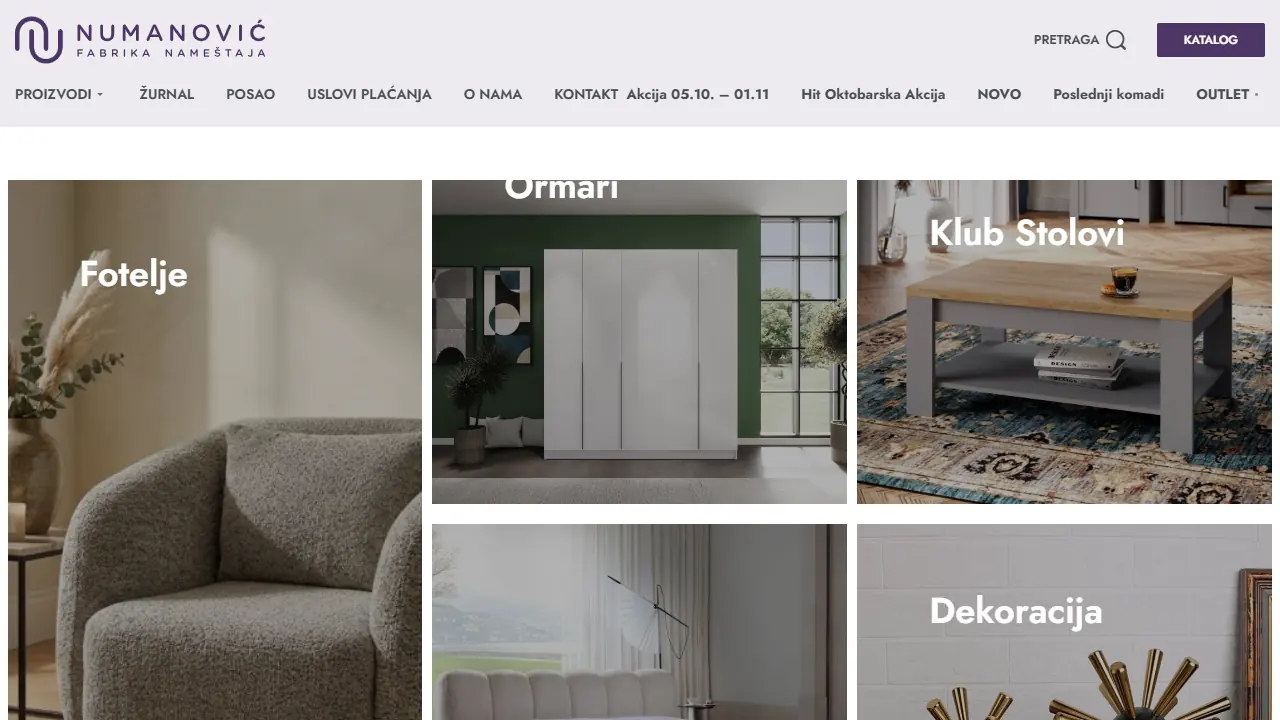
From our work: Numanović — the range organised by room, so customers reach the right product fast.
3. Proof instead of promises
References, real projects, clients’ live websites and a concrete description of the scope build more trust than general claims. We do not invent figures or testimonials — we use what can be verified.
4. One clear next step
Every key page leads to a single action: an enquiry, a call or a message. A button with specific wording and a short form work better than five competing calls to action.
5. Contact without obstacles
The form asks only for what is needed for a first reply, and phone and email are available on every page. Every extra field is one more reason for a visitor to give up.
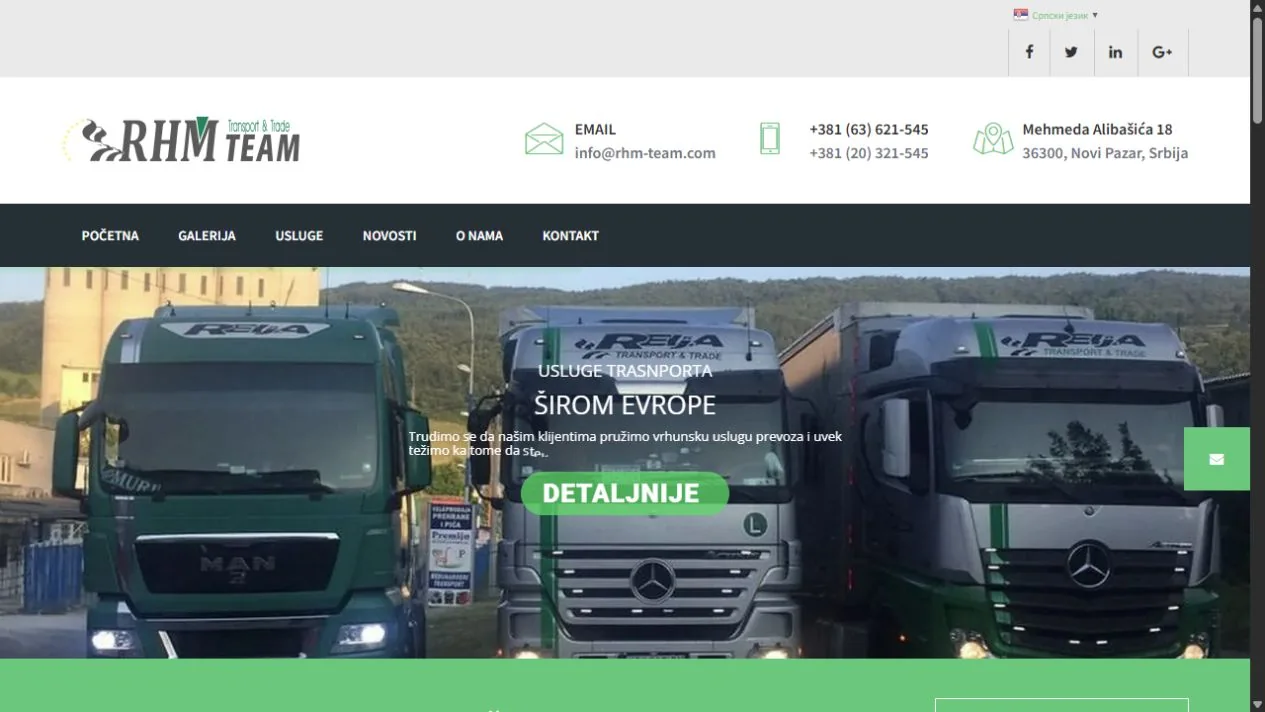
RHM-Team: services, partners and an enquiry in one place — a clear next step for B2B visitors.
6. Speed and mobile experience
Most visitors arrive on a phone. The website has to load quickly, be readable without zooming and have buttons large enough for a finger.
7. A technical foundation for search
Indexing, a sitemap, unique titles and descriptions, structured data and language versions are set up from day one — fixing them later is always more expensive.
How the Ald1n team applies this
Before design starts, you receive a proposed structure and a list of the materials we need. That way both you and we know exactly what the website has to achieve — and design and development serve that goal, not the other way round.
AI SEO: how to make your website visible in AI search
More and more searches end with an answer instead of a list of links. Google shows AI Overviews, and many users ask AI assistants directly. For businesses this raises a practical question: how does your website become a source those answers are built from? That is what AI SEO is about.
What Google actually says
Google’s documentation states that there are no additional requirements to appear in AI features in Search: no special file, no special markup and no “AI optimisation” beyond core SEO practices. A page has to be indexed and eligible to be shown in search results. For us, AI SEO is therefore not a trick but well-executed SEO, applied consistently.
Six things we check on every website
Answers to real questions. Service pages and FAQs answer what customers actually ask: what is included, who it is for and how the collaboration works.
Clear structure. One H1, logical subheadings, short paragraphs and lists — content that is easy to read and easy to extract.
Technical accessibility. A correct robots.txt, a sitemap, canonical URLs, fast loading and content that is not hidden behind scripts.
A clear entity. Who is behind the website, where it operates, how to get in touch and which references are real.
Structured data. Schema helps search engines understand a page — but only when it matches the visible content.
Freshness. Prices, offers and contact details that are accurate today, not two years ago.
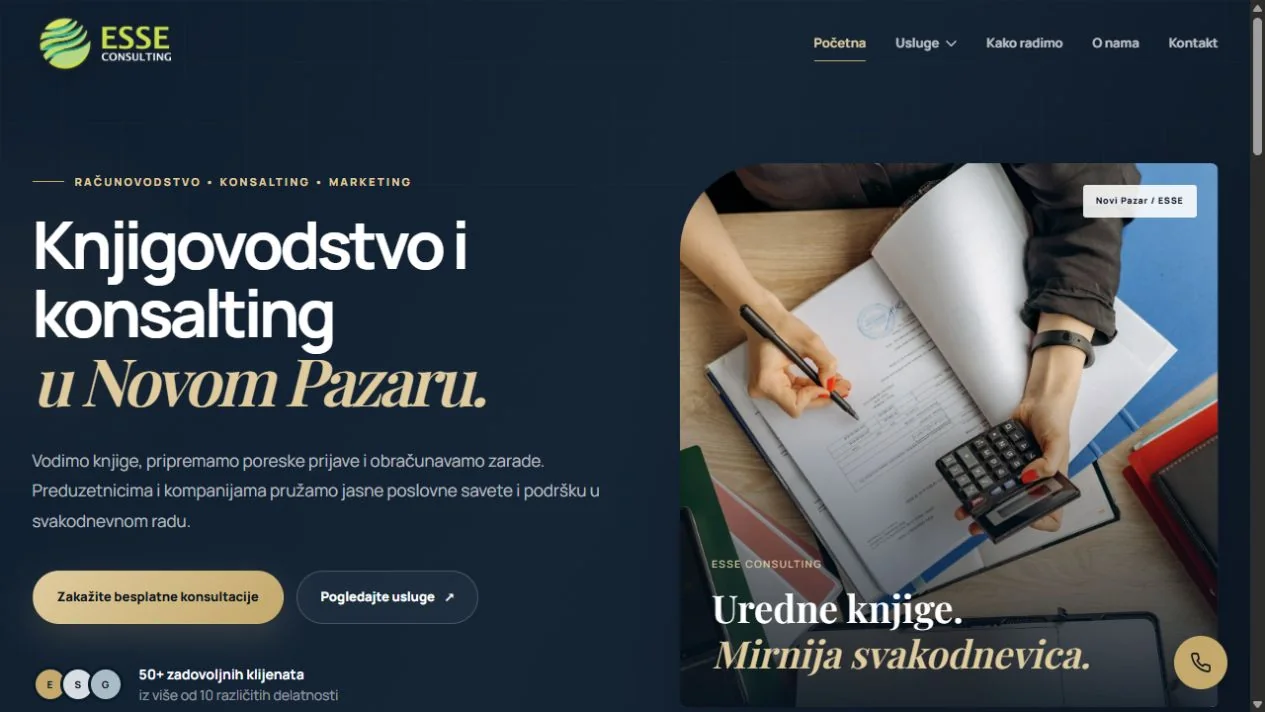
From our work: ESSE Group — services organised by client needs, plus an answer to what to prepare for the first meeting.
What we do not promise
No one can guarantee that a particular page will be cited in an AI answer. That is why we do not sell “AI rankings” or add hidden content meant only for bots. An llms.txt file can be a useful addition, but it is no substitute for accessible, high-quality content.
How we measure progress
Google Search Console remains the primary source: impressions, clicks and the queries a site appears for. Alongside it we track the quality of enquiries that come through the website — because the goal is more of the right customers, not just more visits.
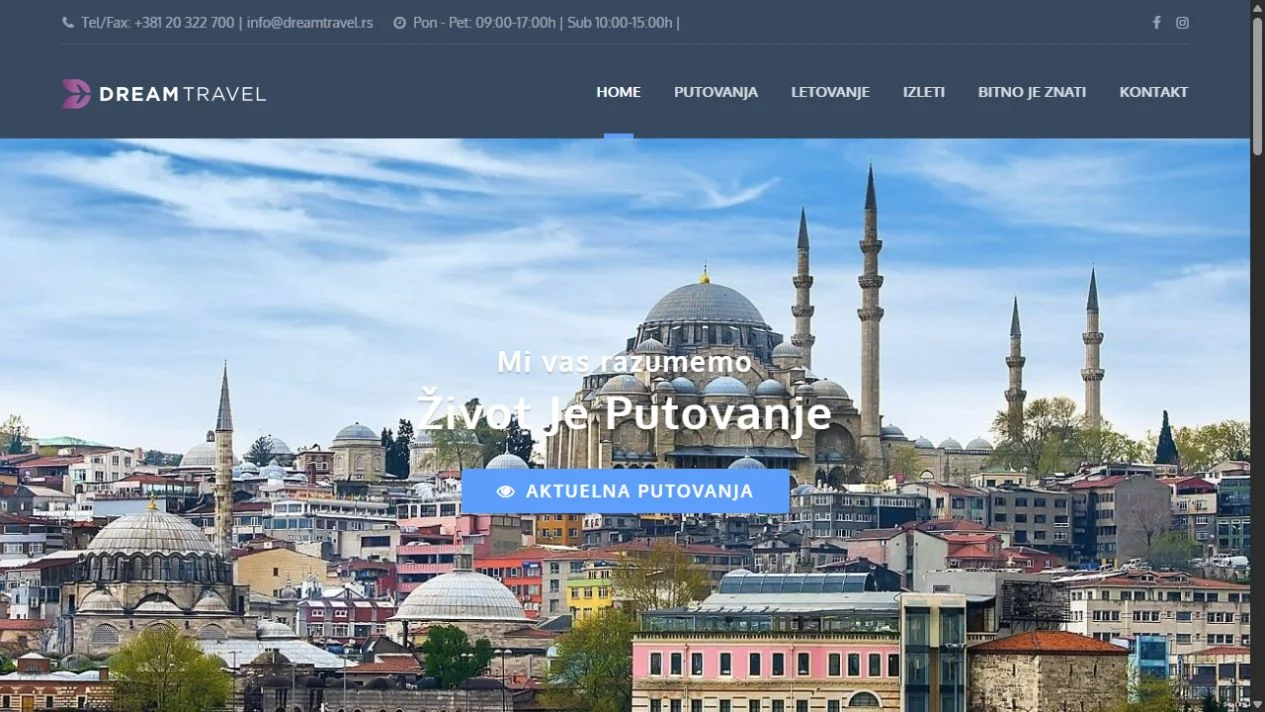
DreamTravel: travel programmes as clear pages — content that is easy to read and easy to extract.
How the Ald1n team approaches AI SEO
On every project we start with a technical and content review, then refine the structure and the service copy, and only then add structured data and FAQs. We applied the same approach to this website, in all three languages.